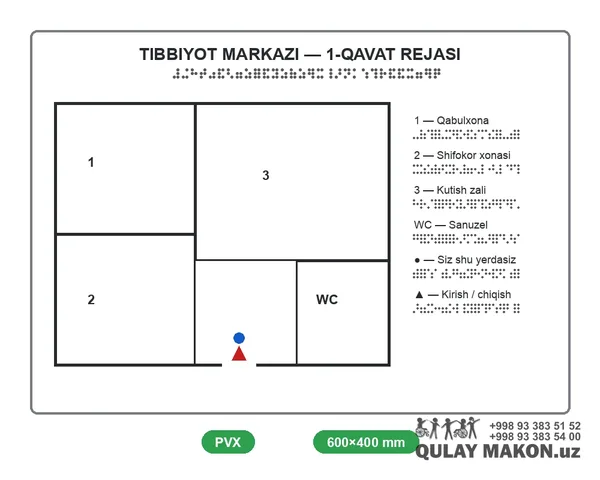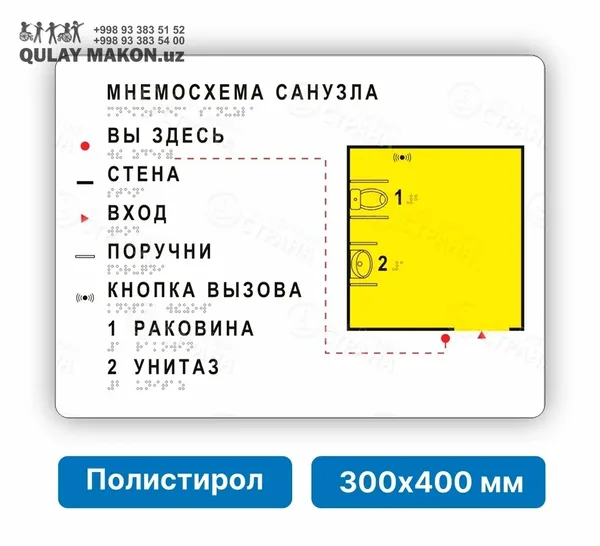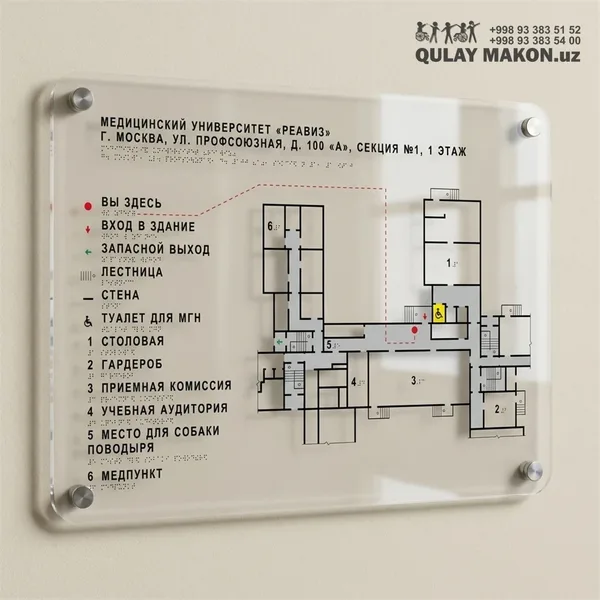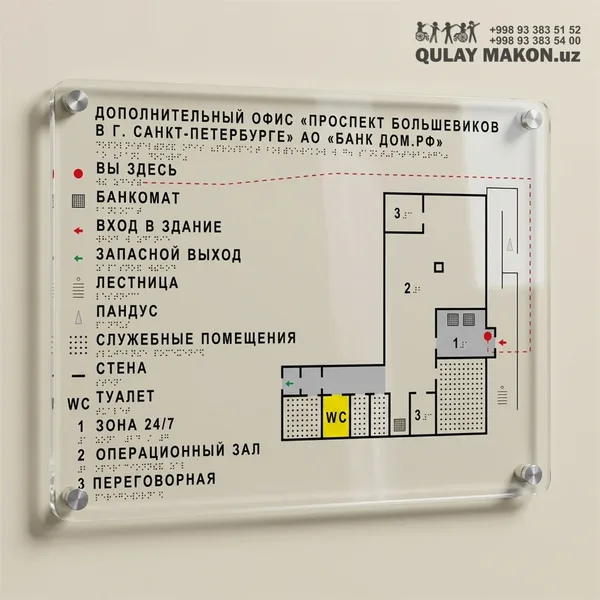
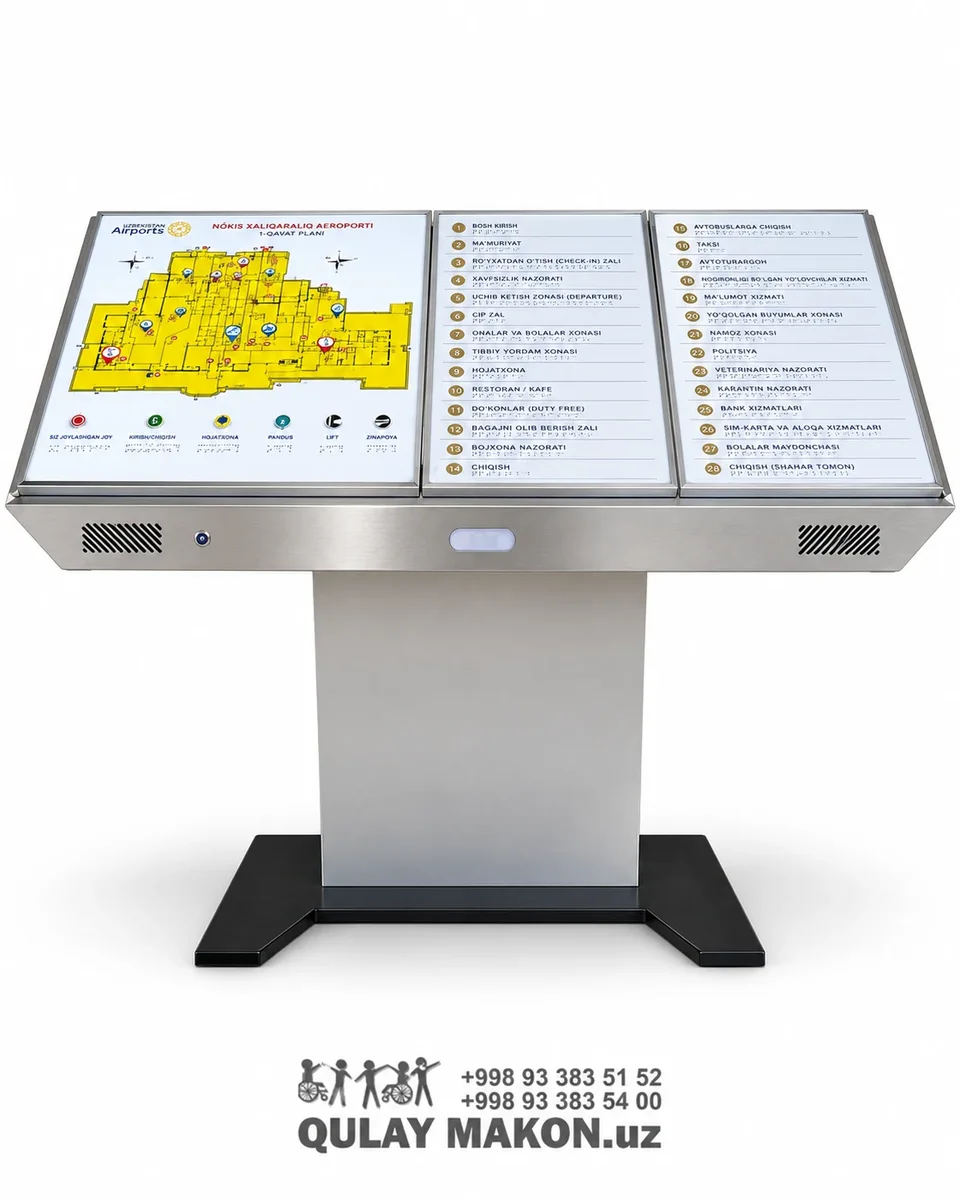
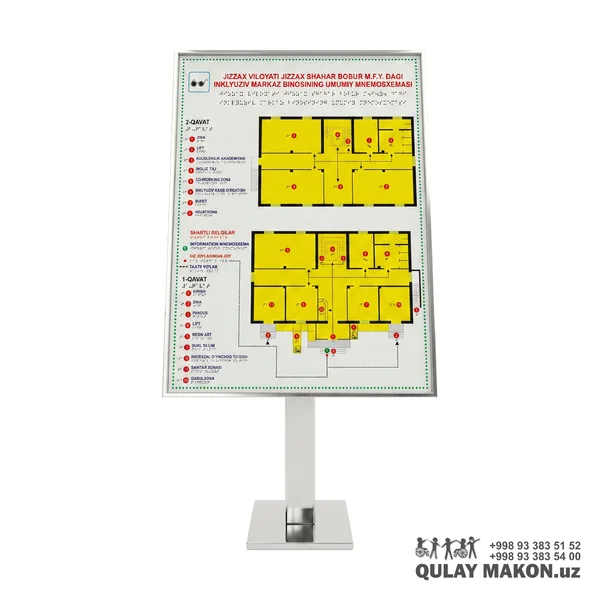
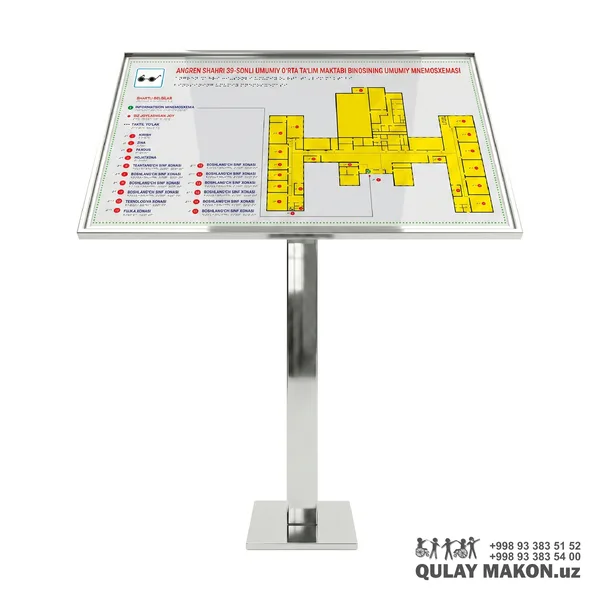
Audio tactile mnemonic map lectern — 3 panels, stainless steel housing (speakers, presence sensor, Braille)
- Category Audio and standard mnemonic maps
- Color Stainless steel + yellow plan (high contrast)
- Type Audio tactile mnemonic map lectern
- Surface Tactile relief + Braille, high-contrast print
- Base Steel, powder-coated (black)
- Languages Uzbek, Russian, English (to order)
- Size To order (per building plan)
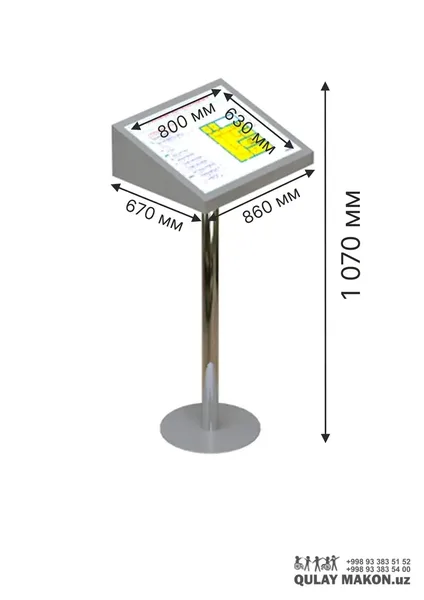
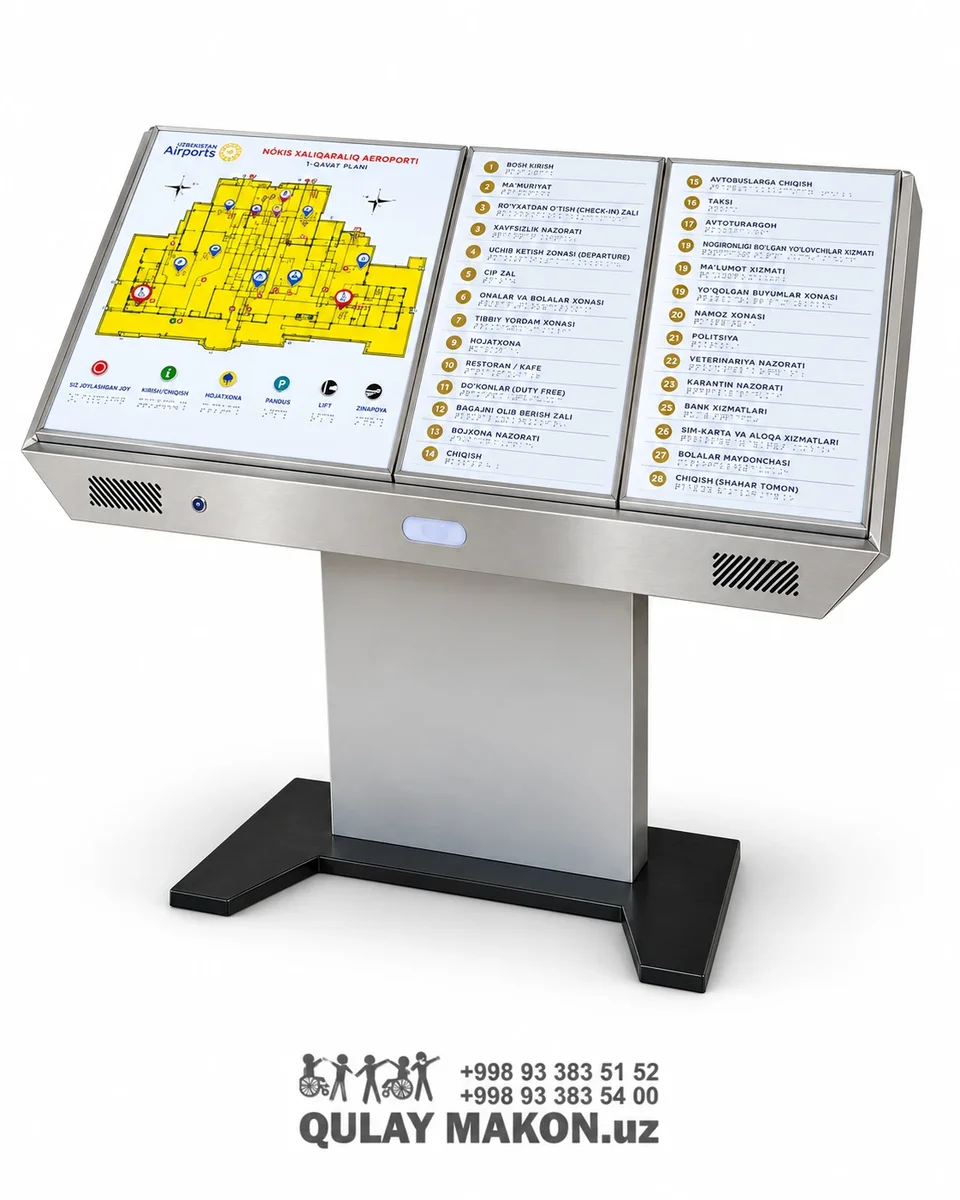
- Panels 3: floor plan + 2 numbered room lists
- Power supply AC 220 V
- Installation Anchor bolts to the floor
- Additional Induction loop, staff call button
- Audio module Digital audio player, 2 speakers
- Audio updates Replacing audio files (USB)
- Activation Presence sensor + button
- Housing and column Stainless steel (brushed)
- Volume Adjustable
- Production time 3–4 weeks
Description
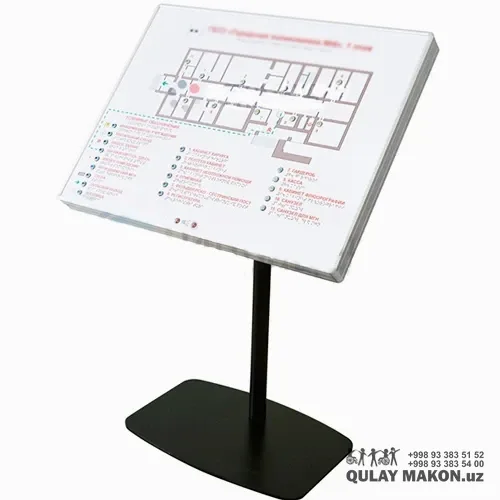
An audio tactile mnemonic map lectern is an information stand for a building's entrance area that conveys the floor plan through three channels at once: relief you can read by touch, Braille and spoken guidance. A blind visitor reads a standard tactile map by hand; an audio map also tells them out loud where they are standing, where the main rooms are and how to get there. That makes it clear to blind and partially sighted visitors, to older people and to anyone who does not read Braille.
How it works:
- When a visitor approaches, a presence sensor triggers a short spoken greeting, so the person knows straight away that a map is in front of them.
- Pressing the button on the front panel plays a description of the building layout, the room list and the main routes (entrance, check-in, toilets, lift, exit).
- Sound comes from two built-in speakers, and the volume is set to suit the background noise of the space.
- Messages are recorded in Uzbek, Russian and English (languages to order) and can be updated later by replacing the audio files.
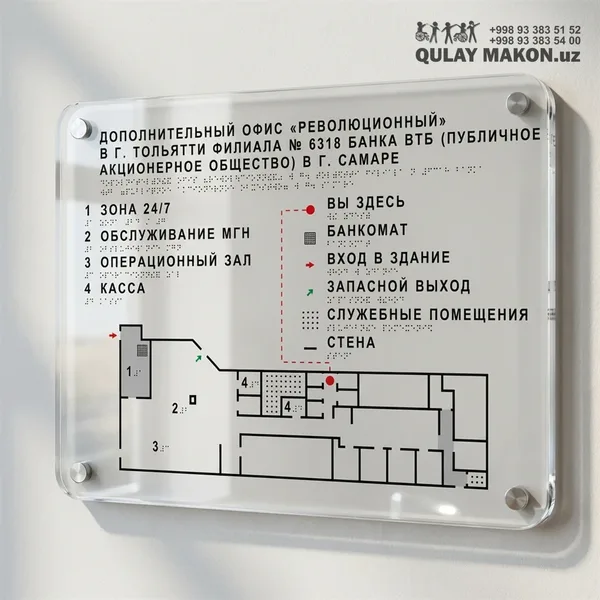
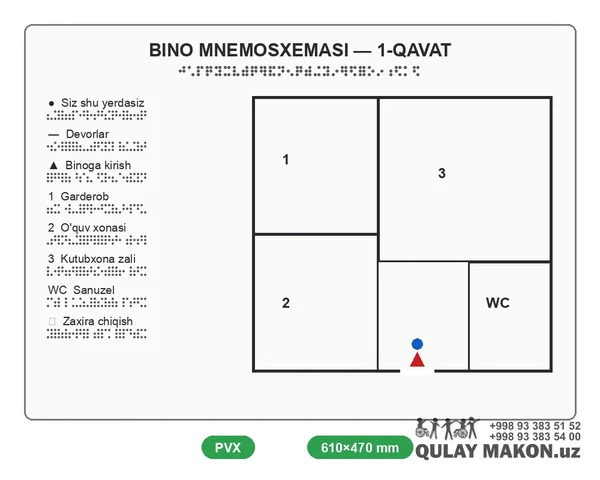
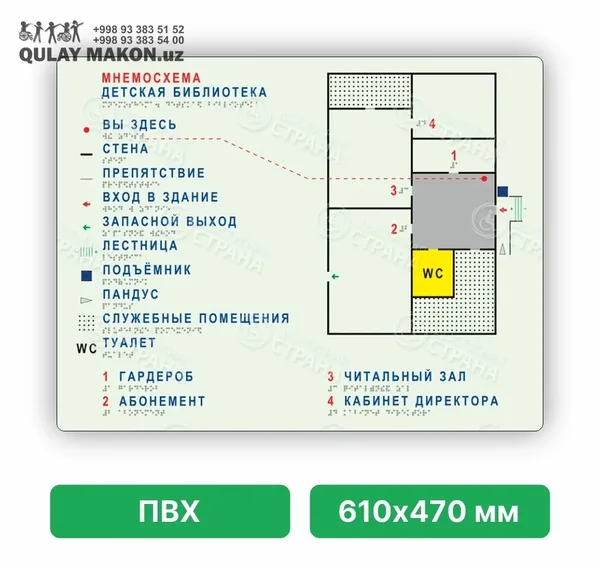
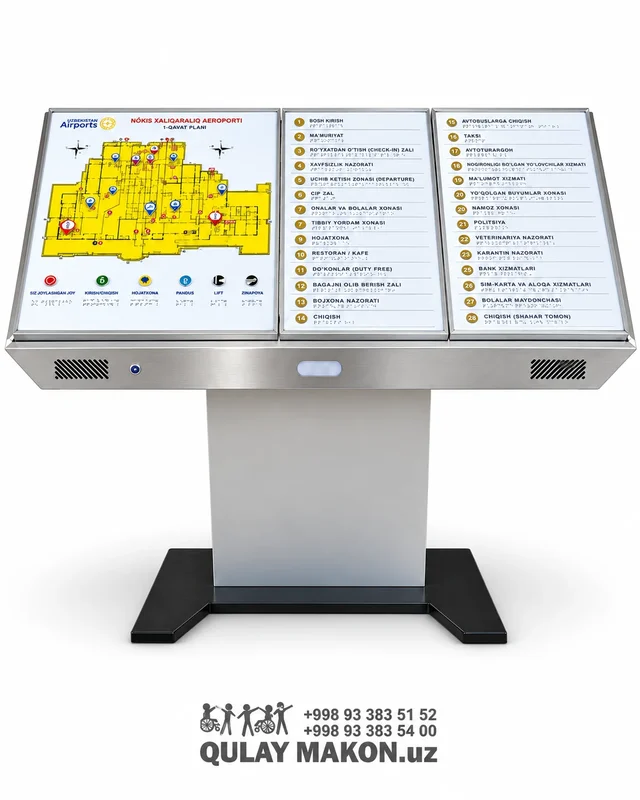
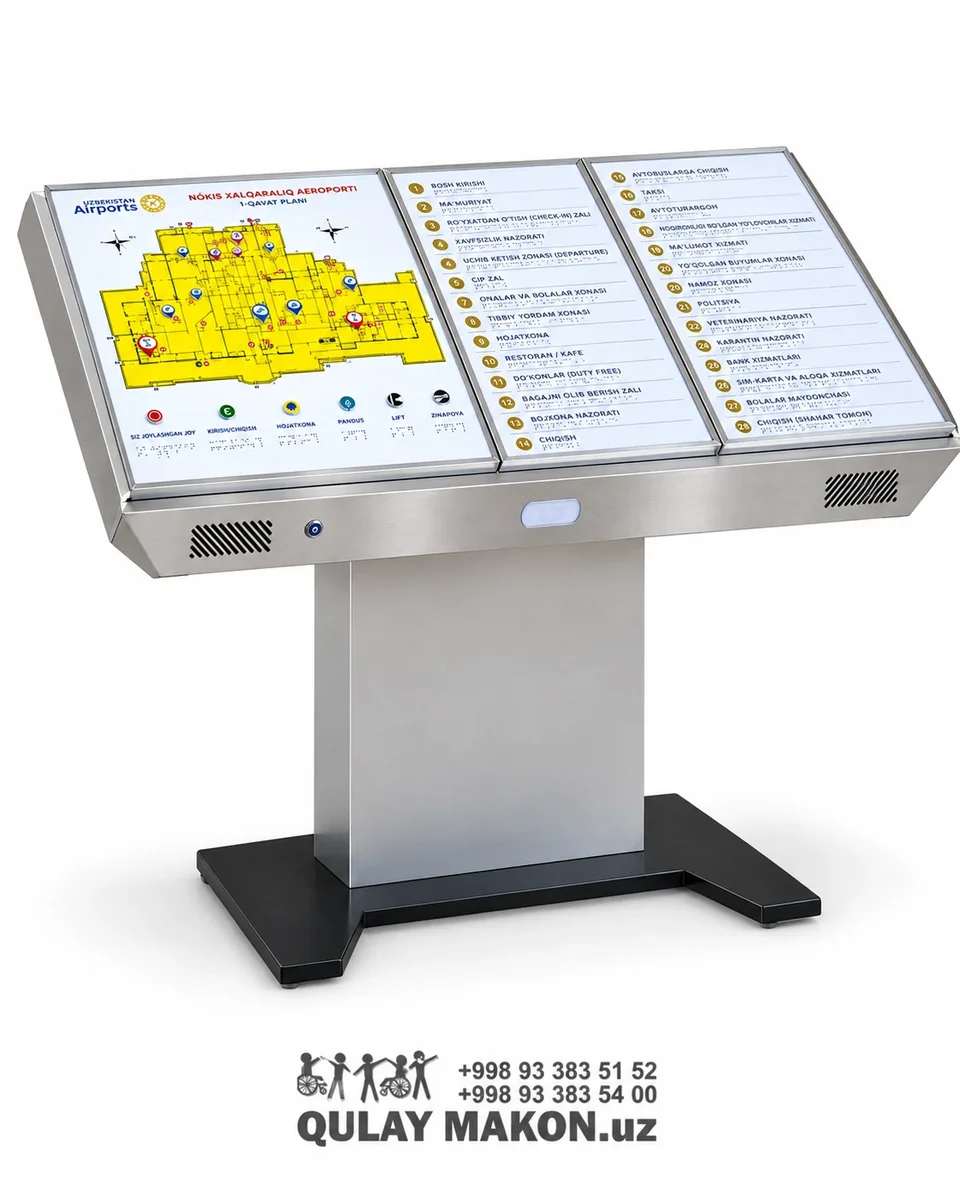
Construction: a sloped three-panel surface — the left panel carries the raised floor plan and map symbols (you are here, entrance/exit, toilets, ramp, lift, stairs), the centre and right panels carry a numbered room list with every item repeated in Braille. The housing and column are brushed stainless steel, the base is powder-coated steel, and the stand is anchored to the floor. The slope makes reading by hand easier and keeps the surface at a comfortable height for a wheelchair user.
Made to order: the plan and room list are drawn from your building's drawings and simplified for touch reading; the number and size of panels, the audio script and the languages are agreed with you. An induction loop for hearing-aid users and a staff call button can be added. The solution is selected taking accessibility norm requirements into account.
For whom
Blind and partially sighted people, older visitors, people with disabilities and limited mobility; organisations adapting airports, railway stations, hospitals, universities, museums and public institutions.
Usage instructions
1. Send the building plan and the room list
2. A map layout and audio script are prepared and agreed with you
3. Voice messages are recorded in the chosen languages
4. The stand is installed in the entrance area where the tactile path ends and connected to 220 V mains
5. Sensor sensitivity and volume are adjusted on site
Where to use
Airport terminal, Railway station, Bus station, Metro, Hospital and clinic, University, Museum, Library, Public institution entrance, Shopping mall
Compare with similar products
| Feature | Audio tactile mnemonic map lectern — 3 panels, stainless st… | Tactile mnemonic map — on a stand (with Braille) | To'plam: taktil mnemosxema + chaqiruv tugmasi |
|---|---|---|---|
| Price (UZS) | Price on request | 7 000 000 | 7 500 000 |
| Color | Stainless steel + yellow plan (high contrast) | Kumush (nerjaveyka) ramka + oq fon | — |
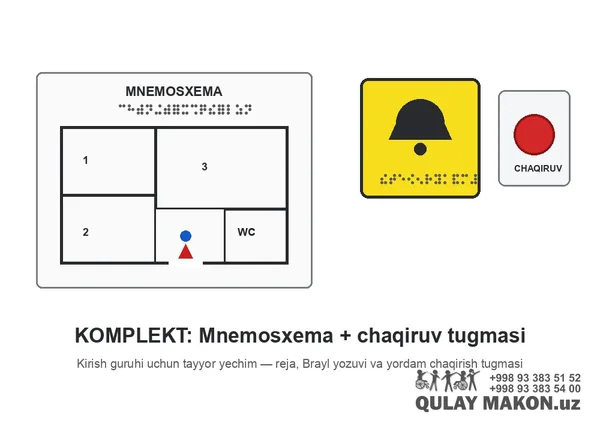
| Type | Audio tactile mnemonic map lectern | Taktil mnemosxema (oyoqli stend) | Tactile map and call button set |
| Installation | Anchor bolts to the floor | Og'irlikli oyoqli stend (yerni teshmaydi) | — |
Frequently asked questions
How does an audio mnemonic map work?
When a visitor approaches, a presence sensor plays a short spoken greeting. Pressing the button on the front panel plays a description of the building, the room list and the main routes through two speakers. At the same time the plan can be read by hand from the relief and Braille.
How is it different from a standard mnemonic map?
A standard tactile map is read by touch only and requires knowing Braille. An audio map also speaks the same plan aloud, so it works for people who do not read Braille, for partially sighted and for older visitors.
Which languages are the messages in, and can they be changed?
Messages are usually recorded in Uzbek, Russian and English; the set of languages is agreed at order. If something changes in the building, the messages are updated by replacing the audio files.
What is needed to place an order?
A building or floor plan (drawing or photo), the room list, the languages you need and the installation spot. From these we prepare the layout and audio script and agree them with you.
How is the stand powered and installed?
The stand runs on 220 V mains with the cable routed inside the column. The base is fixed to the floor with anchor bolts. It is usually placed in the entrance area where the tactile path ends.
Review text
No reviews yet. Be the first to leave a review!
Customers also bought
Other customers viewed with this product