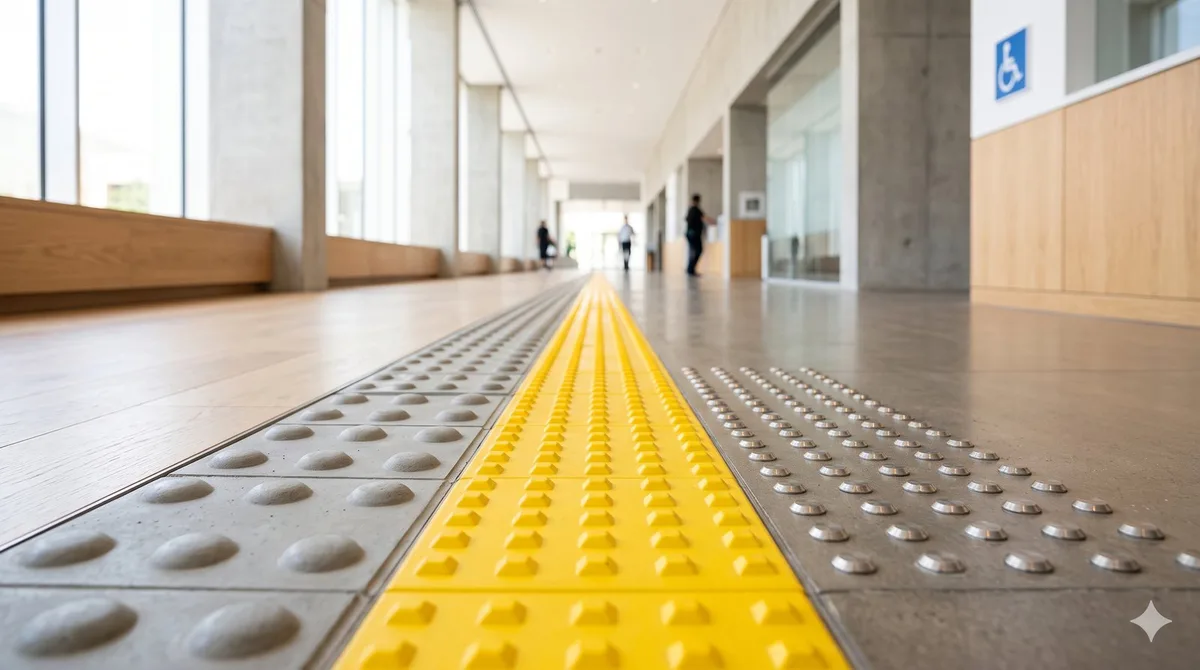
Tactile paving consists of directional and warning surface elements that help blind and visually impaired people find their way through a space. Choosing the right material determines whether the surface lasts for years or wears out in a single season. In this article we look at what tactile paving materials are available, their pros and cons, whether they suit outdoor or indoor use, and how to choose the right option for specific conditions — foot traffic, weather, and floor type.
What tactile paving is made from
Tactile indicators are produced from a range of materials — from soft polyurethane to stainless steel and brass. Each material is designed for its own conditions: some handle frost and de-icing chemicals well outdoors, while others are intended for smooth floors inside buildings. Let's look at the main groups.
Polyurethane and PVC
Polyurethane tactile paving is one of the most popular options for indoor areas and zones with moderate loads. Polyurethane is flexible, abrasion-resistant, and bonds well with adhesive.
- Pros: low weight, simple installation onto an existing base, bright colours, strong contrast.
- Cons: under heavy outdoor foot traffic it lasts less than concrete.
PVC tiles and overlays have similar properties and are convenient for quick repairs and refreshing floors that are already in use.
Rubber, concrete, and porcelain stoneware
Rubber tiles are soft, slip-resistant, and absorb impact — they are often used at transit stops and on ramps. Concrete tactile paving is the choice for outdoor areas with heavy foot traffic: it is durable and withstands frost and loads, but it is heavy and requires base preparation. Porcelain stoneware suits places where appearance matters: lobbies, shopping centres, and stations. It is abrasion-resistant but calls for careful installation and attention to slip resistance.
Metal indicators: stainless steel and brass
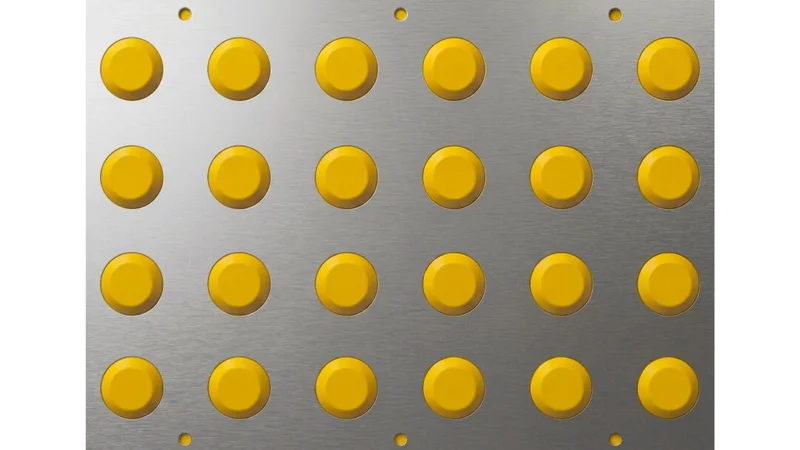
Tactile indicators made of stainless steel and brass are individual studs and bars that mount directly into an existing floor. They are chosen for prestigious interiors and stone floors.
- Pros: durability, a neat appearance, installation without replacing the surface.
- Cons: brass loses its shine over time, and each indicator must be installed precisely.
Tactile paving for outdoors or indoors
Outdoor tactile paving must withstand temperature swings, moisture, de-icing chemicals, and heavy loads — concrete, rubber, and durable polyurethane work well here. Indoors, a neat appearance, contrast, and compatibility with the existing floor matter more — and here polyurethane, PVC, and metal indicators come out ahead. The main rule: outdoor materials can be used indoors, but indoor solutions wear out quickly outside.
How to choose a material for your conditions
- Foot traffic: high — concrete, porcelain stoneware; moderate — polyurethane, rubber.
- Weather: open outdoor areas — frost-resistant materials; covered areas — almost anything.
- Floor type: overlays and metal indicators are easier to fit onto existing tiles and stone.
- Contrast: yellow by default, but the colour is chosen so it stands out against the floor.
All solutions are selected with the requirements of applicable accessibility norms in mind.
Common mistakes and maintenance
Typical mistakes include choosing a thin indoor material for outdoor use, installing without contrast, and fitting onto an unprepared base. Maintenance is simple: regular cleaning of dirt and ice, checking that the indicators are secure, and replacing worn elements in good time. This preserves both the wayfinding function and the look of the surface.
Frequently asked questions
Which tactile paving material is best for outdoor use? Concrete, rubber, and durable polyurethane work well outdoors — they withstand frost, moisture, and heavy foot traffic.
Can tactile indicators be installed on an existing floor? Yes, metal indicators made of stainless steel and brass, as well as polyurethane overlays, mount directly into the existing surface.
What colour should tactile paving be? Most often yellow, but the colour is chosen for contrast: the element should stand out clearly against the main floor.
Not sure which material suits your conditions? Browse tactile paving in our catalogue — we will help you choose an option and offer a free consultation.