A ramp is an inclined structure that takes the place of steps, allowing a person in a wheelchair, using a walking frame, or pushing a pram to overcome a difference in height safely. A well-chosen wheelchair ramp opens up entrances, shops, clinics and private homes. In this article we look at the different types of ramps, what they are made from, and what to pay attention to when choosing one.
Why a ramp is needed
The main purpose of a ramp is to provide barrier-free access for people with reduced mobility. Even a single step at an entrance can completely close off a building to a wheelchair user. A ramp solves this problem, but it only works with the right gradient and width: a slope that is too steep is dangerous, while one that is too narrow is uncomfortable. That is why choosing a ramp always begins with measuring the height to be overcome and the space available.
Types of ramps by design
Ramps are divided into several types according to how they are installed and used, and each has its own area of application:
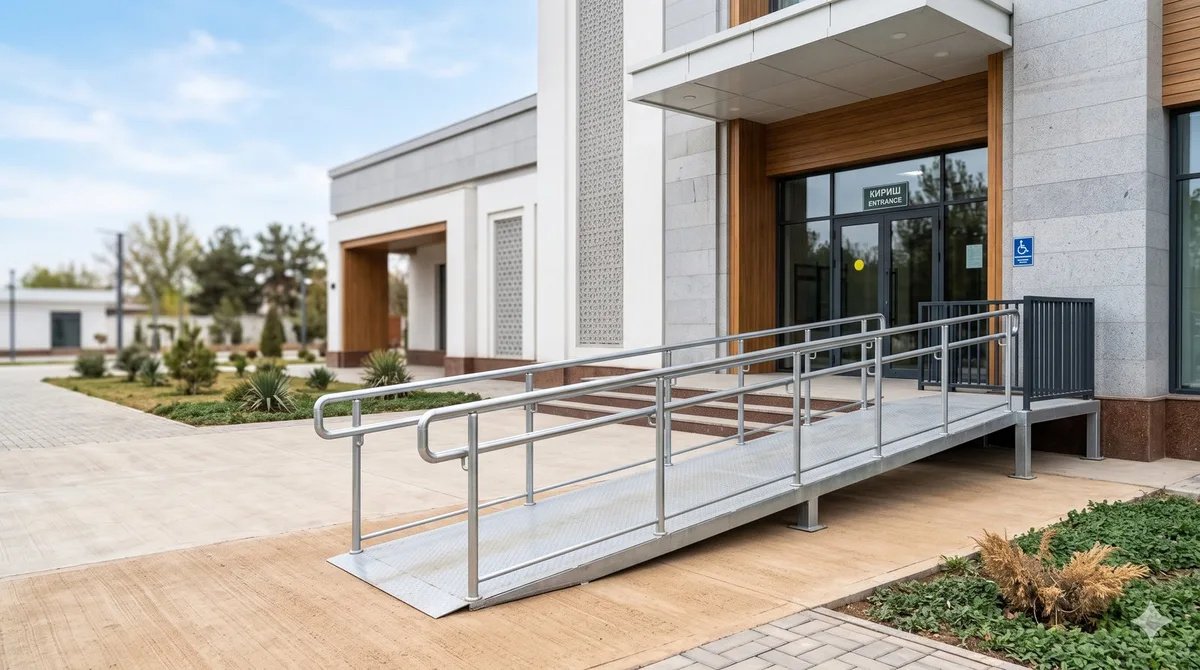
- Fixed ramps — permanently installed at building entrances, designed for constant use and heavy loads.
- Folding ramps — attached to a wall or doorway and lowered when needed; convenient in narrow entrances and on stair landings where the passage cannot be blocked.
- Portable ramps — a lightweight folding structure you can carry with you; suitable for one-off trips and temporary use.
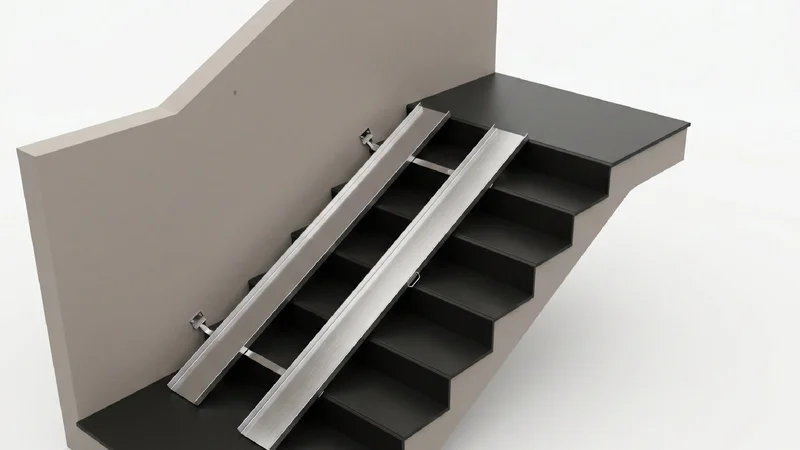
- Telescopic ramps — two extendable channels (rails) that adjust in length to fit a specific staircase or threshold.
- Roll-up ramps — roll up into a bundle, take up minimal storage space and unroll quickly on site.
Materials used
Two materials are most commonly used. An aluminium ramp is light, does not rust and is easy to carry, which is why it is chosen for folding, portable and telescopic models. Stainless steel is stronger and more durable, withstands heavy loads and copes well outdoors, so it is used for fixed structures. The working surface matters too: a ribbed or anti-slip coating keeps wheels and footwear from sliding in rain or icy conditions.
Which ramp suits which situation
The right choice depends on where and how often the ramp will be used. For a permanent building entrance, a fixed structure is the best fit. For a flat or entrance where space is limited, a folding ramp is convenient. If you need to overcome thresholds or steps in different places from time to time, a portable or telescopic option is the way to go. For travelling and storing in a car, a roll-up ramp is the most practical.
What to look for when choosing
Before buying, it is worth checking a few key parameters so that the ramp is safe to use:
- Gradient — calculated with the requirements of applicable accessibility norms in mind; the greater the height, the longer the ramp needs to be.
- Load capacity — should cover the combined weight of the person, the wheelchair and any attendant.
- Width — take the dimensions of the wheelchair in use into account.
- Surface — must be anti-slip.
- Weight and compactness — critical for portable and folding models.
Common mistakes
The most common mistake is a ramp that is too steep because it is not long enough: it becomes impossible to go up independently and dangerous to come down. People also often overlook the side edges that stop wheels from slipping off, as well as securing portable models firmly to the steps. Another mistake is choosing a ramp without allowing for the actual width of the wheelchair, so the wheels catch on the edges.
Frequently asked questions
How does a folding ramp differ from a portable one? A folding ramp is fixed in place and lowered when needed, whereas a portable ramp can be carried with you and used in different locations.
Why is an aluminium ramp so popular? It is light, does not rust and is easy to carry, which makes it ideal for folding and telescopic structures.
Can a ramp be matched to a specific staircase? Yes — telescopic and fixed models are selected to suit the height difference and doorway width once measurements have been taken.
Not sure which option is right for you? Take a look at our ramp catalogue and get a free consultation — we will help you choose based on measurements and arrange delivery and installation.