A disabled parking space is more than just an open spot near the entrance. For a space to actually do its job, it has to be marked according to specific rules: with a sign, with road markings and with the right dimensions in mind. Otherwise, other cars will take the spot, and a person with a disability will have nowhere to safely get out of the vehicle. Let's look at how it all works.
Why dedicated spaces are needed
Someone who uses a wheelchair needs more room beside the car to transfer into the chair and move away. A regular narrow space simply doesn't allow for this. That is why disabled parking spaces are made wider and placed as close to the entrance as possible — to shorten the distance.
The wheelchair symbol sign
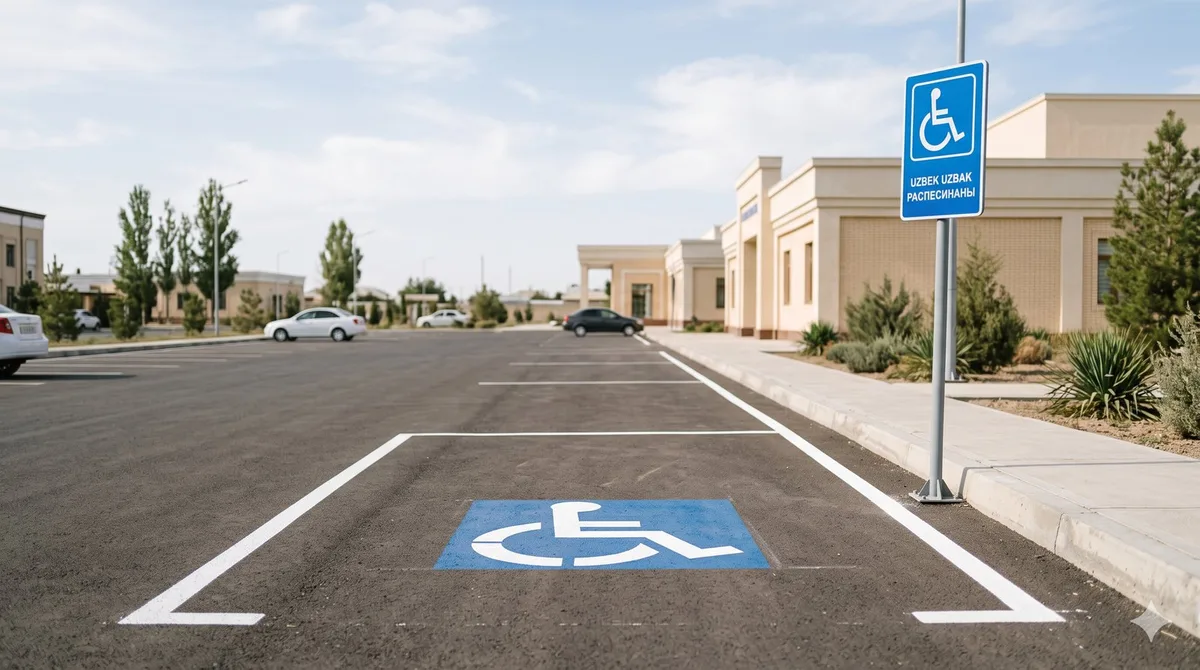
The main element of the marking is a road sign with the accessibility symbol (a person in a wheelchair). It comes in several formats:
- a post-mounted sign — installed in front of the space and visible from a distance;
- an information plate — clarifying that the space is reserved for people with disabilities;
- a wall-mounted sign — for covered car parks and underground garages.
Signs are made from materials resistant to UV light and the weather, so the image doesn't fade and stays legible in an open parking lot.
Markings on the asphalt
Besides the sign, the space is set apart with road markings. Usually this is the accessibility symbol painted directly onto the surface, along with an outline of the space itself. Stencils are used to apply it — they produce a neat and consistent image. Clearly visible markings reduce the chance that another car will take the spot.
Dimensions and placement
A disabled parking space is made wider than a standard one so that a wheelchair fits alongside and the person can get out freely. An extra side access zone is often included. The spaces themselves are positioned on the shortest route to the entrance and to an accessible path — for example, to a ramp or a level sidewalk without a curb.
How many spaces are needed
The number of disabled parking spaces depends on the total number of spaces in the lot and the purpose of the building. The larger the parking area, the more dedicated spaces are required. It's best to work out the exact number in advance — at the planning stage for the parking lot of a shop, hospital, bank or residential complex.
What a complete marking set includes
- a post-mounted road sign (or a wall-mounted one for a garage);
- the accessibility symbol painted on the asphalt;
- an additional clarifying plate, if needed;
- marking of the side access zone.
Together these elements make the space visible, clear and protected from being taken by accident.
Common mistakes when setting up a parking lot
A space created just to tick a box often fails to do its job. Here is what comes up most often:
- The space is too narrow. Without an extra side zone, a person can't transfer into the wheelchair and move away.
- The space is far from the entrance. If you have to cross the entire lot to reach the door, the whole point of a dedicated space is lost.
- Only a sign or only markings. The sign is visible from a distance, the markings define the space itself — you need both.
- A faded sign or worn-out markings. Illegible marking no longer protects the space from being taken.
- A curb in the way. If there is no dropped curb or ramp between the space and the entrance, you still can't reach the door.
Parking at different types of buildings
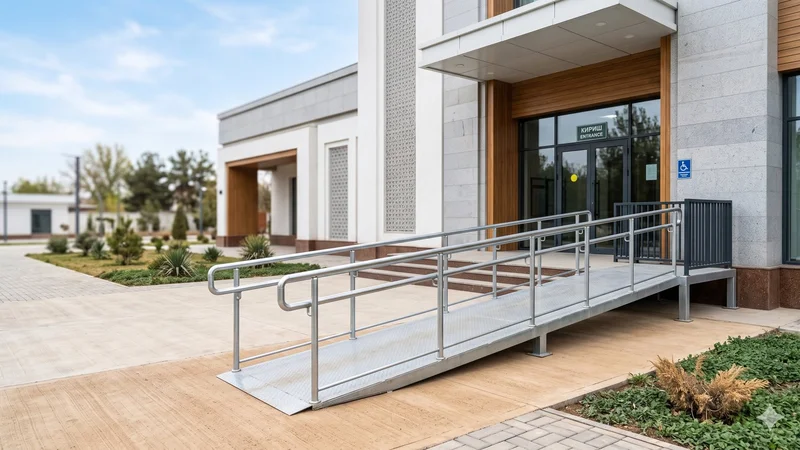
The approach depends on the type of building. At a shopping center or supermarket, spaces are placed by the main entrance in an open lot — with a post-mounted sign and road markings. In an underground or covered car park, wall-mounted signs are more common. At a residential complex, a clinic or a government office, it's important not only to allocate the spaces but also to connect them to the entrance with an accessible route — via a dropped curb or a ramp. The clearer the layout, the less often other drivers take the dedicated spaces.
Frequently asked questions
Are markings alone enough, without a sign? It's better to use both a sign and markings: the sign is visible from a distance and as you approach, while the markings define the space itself. Together they work more reliably.
Where should disabled parking spaces be placed? As close as possible to the entrance and to an accessible route, so the person doesn't have to overcome unnecessary obstacles.
What are the markings applied with? Accessibility symbol stencils are used to create a neat, repeatable image.
We'll help you choose signs and stencils, work out the number of spaces, and mark your parking lot the right way. View parking signs or get a free consultation.