Every child has the right to learn alongside their peers. But for a student who uses a wheelchair, or who is blind or hard of hearing, an ordinary school often turns into an obstacle course: a high front porch, slippery stairs, narrow doorways, an unusable restroom. Adapting a school is not a one-off renovation but the thoughtful creation of an accessible environment where everyone feels they belong. Here is where to start and how to move forward step by step.
Why inclusive education matters
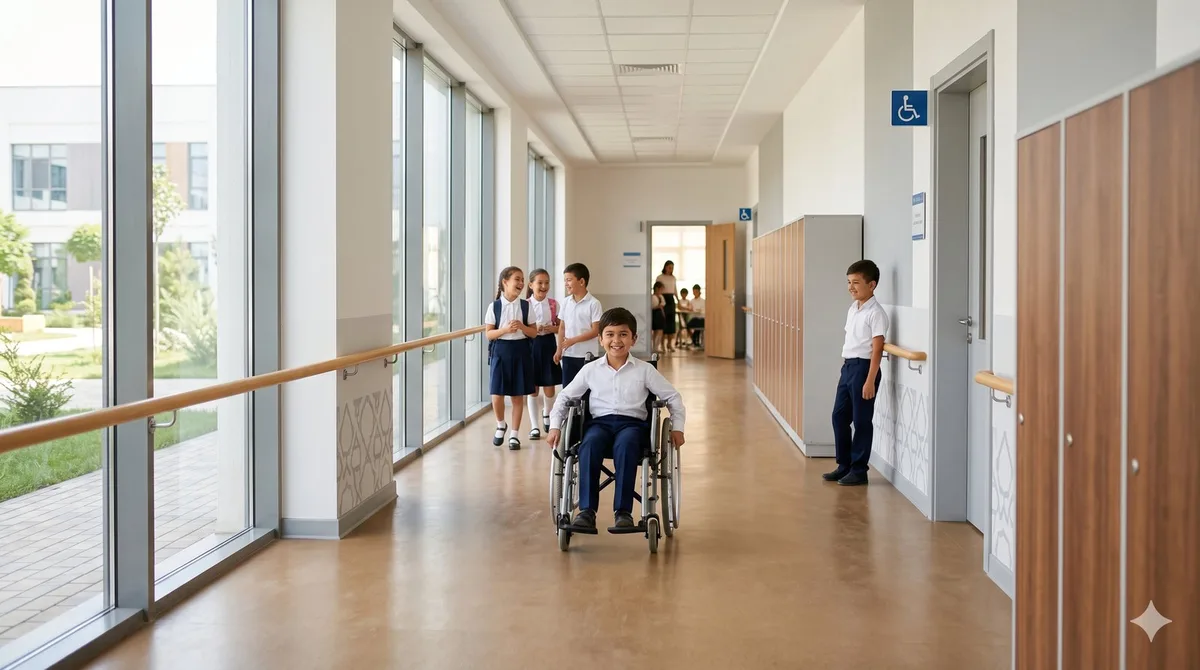
Inclusive education is not only about the building and the equipment. It is about children with disabilities growing up beside their peers rather than being isolated. Learning together builds empathy in every student and gives a child with special needs a real chance at an independent life. But without physical accessibility, even the best intentions stop right at the front door.
What barriers exist in a school
Before changing anything, it is important to see the school through the eyes of a child with a disability. Typical barriers include:
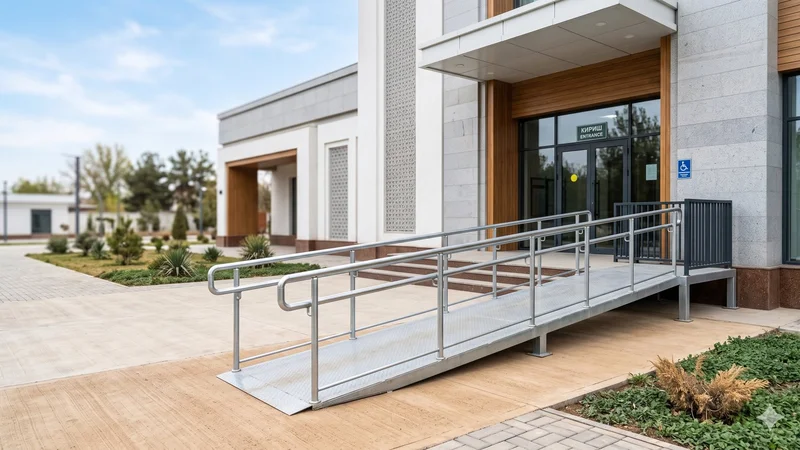
- The entrance. High steps and heavy doors with no ramp or handrails.
- Stairs. No handrails on both sides, and no contrasting markings on the step edges.
- Classrooms and corridors. Narrow passages, thresholds, and furniture that blocks a wheelchair.
- Restroom. No accessible stall with grab bars and room to turn around.
- Wayfinding. A blind student has nothing to orient by: no tactile guides or signage.
- Safety. Evacuation is not planned for those who cannot quickly descend the stairs.
What to introduce first
The best place to start is the route a child uses every day, from the gate to the classroom. The basic set:
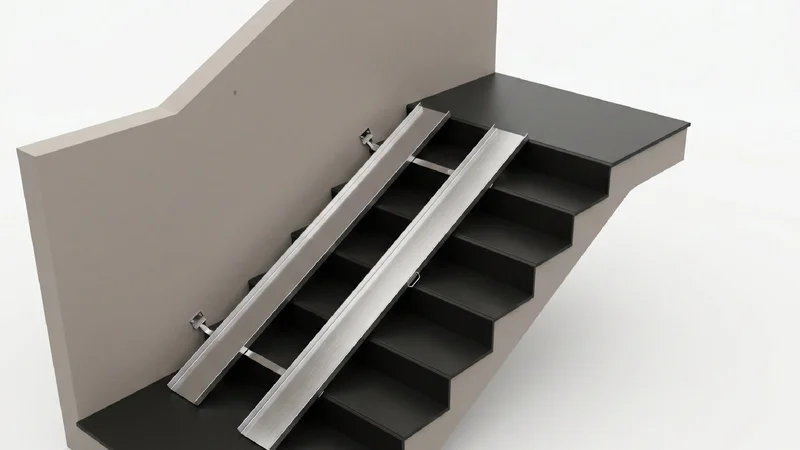
- A ramp at the entrance with the correct slope and handrails. This is the first thing, and nothing else works without it.
- Contrasting markings on the steps and handrails on both sides of the stairs.
- A widened doorway to at least one accessible restroom fitted with grab bars.
- Tactile paving at the entrance, in front of the stairs, and along the paths of travel, for blind and low-vision students.
All equipment is selected with the requirements of applicable accessibility norms in mind, so that the ramp and handrails are genuinely safe rather than merely a formality.
Wayfinding for blind students
A blind child needs an environment that is clear and predictable. Tactile paving sets the direction of travel and warns of hazards: directional strips lead along the corridor, while the "cones" in front of the stairs signal "caution, steps ahead." The system is completed by tactile signs and maps in Braille at the entrance and outside classrooms, along with contrasting color cues for low-vision students. The key rule is a single, consistent logic throughout the route, so the child can memorize the path and move around independently.
Safety and evacuation
An accessible environment is incomplete without a well-planned evacuation. It is important to decide in advance how a child with a disability will leave the building in a fire: refuge areas on each floor, evacuation chairs, trained staff, and clearly defined responsibilities for teachers. Anti-slip surfaces, contrasting step edges, and good lighting reduce the risk of falls on ordinary school days too.
Where to start: a step-by-step approach
There is no need to try to do everything at once. A sensible order:
- Step 1. Audit. Walk the student's route and record every barrier.
- Step 2. Entrance and ground floor. Ramp, handrails, accessible restroom, tactile paving.
- Step 3. Wayfinding. Tactile guides, contrasting markings, signage.
- Step 4. Safety. Evacuation, refuge areas, staff training.
- Step 5. Expansion. Gradually extend accessibility to other floors and rooms.
Frequently asked questions
What is the cheapest and easiest place to start adapting a school? With the entrance: a ramp, handrails, and contrasting step markings solve the most pressing problem, access to the building, and the results are immediately visible.
Why install tactile paving if the school has no blind students yet? An accessible environment is created in advance. A child could enroll in any given year, and tactile paving and wayfinding also improve safety for every student at the same time.
Can an old school building be adapted? Yes. Most solutions, such as ramps, handrails, tactile paving, and an accessible restroom, can be installed in existing buildings step by step, without a complete rebuild.
Want to create a truly accessible environment in your school? We will help you choose the right ramps, handrails, and tactile paving for your building and advise you on priorities free of charge. View the equipment catalog.